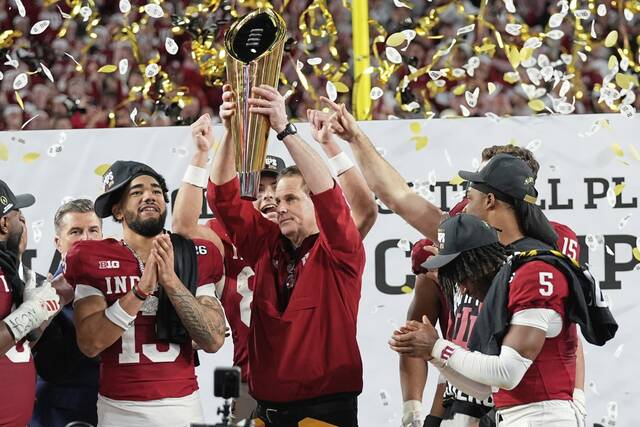
The magnitude surrounding Indiana’s national championship is still being absorbed by the college football universe.
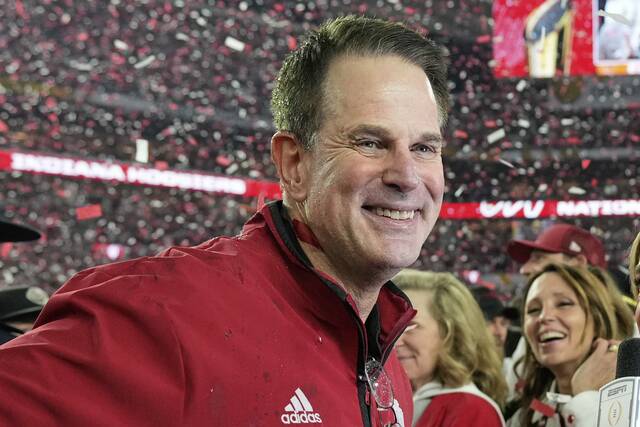
In the span of two years, coach Curt Cignetti transformed one of the most historically futile programs to the top of the sport, provoking coaches, pundits and fans to wonder: How?
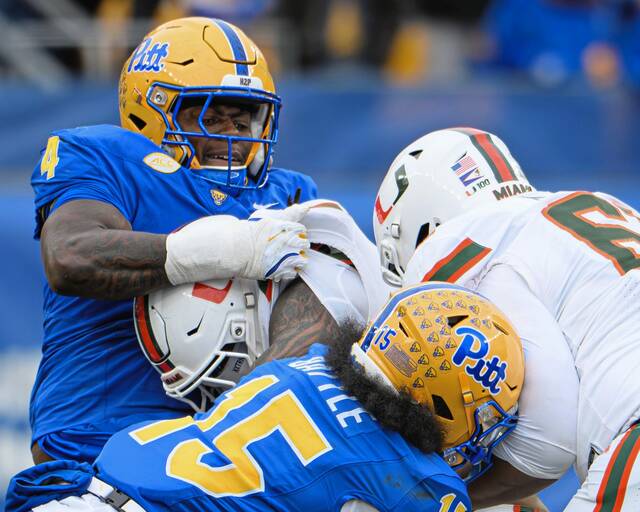
Programs such as Pitt finds themselves pondering if they could pull off something similar. There are both kernels of optimism and stark, unforgiving realities to take into account.
“Is Pitt capable of doing what Indiana did? Yes,” said ESPN/ACC Network analyst Dave Clawson, who coached Wake Forest from 2014-24. “Right now, in college football, recruiting culture, player development, coaching — all those things still matter. I think Pat (Narduzzi) has developed a very good culture, they’re competitive every year, they’re right in the hunt, but to do what Indiana did, there’s also a minimal financial investment you have to have in terms of what your revenue share is, how much are you giving to football and how much of a second bucket do you have?
“The teams that are competing to get to the playoff — you don’t have to have the most money, but there can’t be that much of a delta between the teams that have the most if you want to get to the playoff and make a run like Indiana did. … There’s a certain amount you have to get to if you want to be in that hunt. I would doubt if Pitt is at that level right now.”
Pitt at a glance
Clawson doesn’t have exact numbers about Pitt’s financial competitiveness in the era of revenue-sharing and NIL.
But certain indicators have arisen that provide clues.
Losing star linebacker Rasheem Biles in the transfer portal, among other important pieces such as receiver Kenny Johnson and defensive lineman Francis Brewu, suggest Pitt was outbid by the likes of Texas, Texas Tech and Notre Dame in trying to retain key players.
Of course, transfer portal attrition far predates the arrival of revenue-sharing and NIL. Programs experiencing turnover is nothing new, and there’s often more than meets the eye regarding players’ decisions than just dollar signs.
However, being unable to hang on to important players is troubling.
“I lost 16 starters my last two years at Wake Forest,” Clawson said. “If Pitt was an organ donor, we were a full-body transplant. But even when they lost Jordan Addison to USC — you’re not going to keep everybody.
“Sometimes as a head coach — I don’t care if you’re Texas or Penn State or Ohio State — at a certain point, you can’t be the highest bidder for every kid. But when you see players of that caliber leaving and you never have an established player of that caliber coming in, that’s a little bit of an indicator of where you are.”
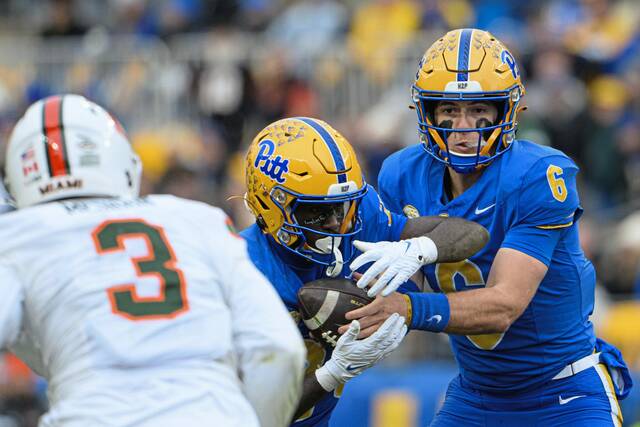
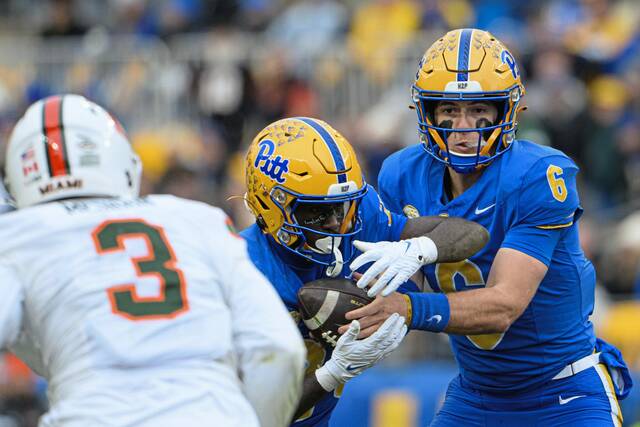
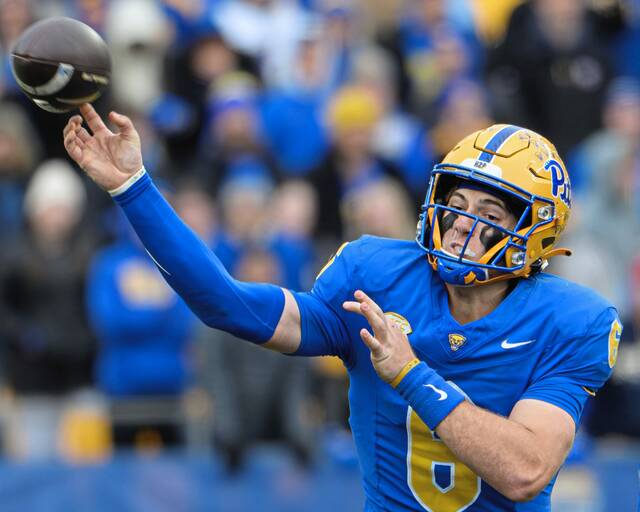
That said, Narduzzi was able to retain quarterback Mason Heintschel and offensive coordinator Kade Bell for next season.
The Panthers brought in a new class of transfers, and there are returning players on both sides of the ball.
But is that enough to start making a jump toward fighting for the College Football Playoff?
“I think Pitt is probably in the top half of the ACC, but I don’t know if they’re in that top 15 to 20 to 25 nationally of schools that are saying, ‘Our goal is to win a national championship,’” Clawson said. “I think Pitt is always going to be competitive in the ACC as long as they have Pat and are able to keep most of their good players.
“I don’t know where Pitt is, but I would guess they’re a good ($5 million to $10 million) away of annual payroll to say they can go on an Indiana-type run.”
The Indiana model
At this point, Cignetti, Hoosiers athletic director Scott Dolson, quarterback and Heisman Trophy winner Fernando Mendoza and a host of others at Indiana have all been asked similar questions about their team’s stunning rise to the top of college football.
Each has offered a take.
For Mendoza, a Cal transfer who was solid but far from elite with the Bears, told CBS News in December that the 2025 Hoosiers featured a combination of players, staff and coaches who were all “overlooked.”
Cignetti is a Leechburg native who brought a non-negotiable desire for winning to Bloomington from previous stops at James Madison and IUP. In the same interview, he said “There’s no magic here. It’s fundamentals.”
Hoosiers play-by-play man Don Fischer pointed out how Cignetti has managed to recruit better offensive and defensive linemen, an ongoing challenge Pitt continues to face.
Dolson commented on reports that in 2024 alone, bolstered by the financial backing of billionaire alumni Mark Cuban (a Mt. Lebanon graduate), Indiana spent more than $60 million on football.
All elements, some seemingly more critical than others, added up to Indiana’s meteoric rise.
“I think it was in some ways a perfect storm,” Clawson said. “They did an amazing job of evaluating, and they hit on a quarterback. I coached against Mendoza when he was at Cal, and he was a very good player, but I didn’t think I was looking at a future Heisman Trophy winner.
“I just think it was a perfect storm of the right people at the right place at the right moment — great coaches, culture people bought into immediately because of the ability to sell it with really good (transfers) (and) great evaluation.”
Money matters
Behind Narduzzi’s stability, Pitt is able to maintain a consistent culture with its football program.
Narduzzi and his staff have had no issue in out-recruiting the competition, finding contributors such as Heintschel, Biles and fellow linebacker Kyle Louis.
Linebacker in particular is a position where the Panthers have continued to produce playmakers.
Pitt also has had several other recruiting success stories of late, evidenced by early contributors in tailback Ja’Kyrian Turner and cornerback Shawn Lee.
“I think he’s a really good coach,” Clawson said of Narduzzi. “If you think of all the coaches that passed through Pitt, I know at times people get frustrated with how he finishes, but what he’s done there consistently for a long time, I hope the people of Pittsburgh don’t take that for granted.”
But is culture and evaluation enough to compete not only for a league title, but nationally, as well?
To do that, major financial resources need to be leveraged.
“I think you need either huge fan bases — Indiana has a lot of living alums,” Clawson said. “When they pass the hat, there’s a lot more hands that can contribute to that hat. It used to be if you had millionaires, you were in good shape. Now you need a couple billionaires.
“I don’t think it’s an accident that the schools have those types of donors that have great interest in athletics that are among the teams every year that are competing for the playoff and the national championship.”
It’s also no secret that finding recruits and signing them is hardly even half the battle.
When select recruits develop into playmakers over the course of several seasons, the retention process becomes imperative.
“When you get those guys into their third and fourth year, and they have developed and you have hit on them, you’ve got to have enough money to keep them,” Clawson said.
Outlook for Pitt
At multiple junctures of his life, Clawson has had a front-row seat to Pitt football being at its best.
His dad, a Pitt graduate, used to take him to games in the 1970s, where he reveled in watching the likes of Tony Dorsett, Hugh Green, Matt Cavanaugh and others who propelled the Panthers into a consistent national contender.
Then, as a coach, Clawson landed at Wake Forest, battling the Panthers in the 2021 ACC championship, the high-water mark of Narduzzi’s tenure at Pitt.
As Pitt gears up for the 2026 campaign, Clawson sees a program with distinct advantages but limitations regarding financial resources to attain elite success.
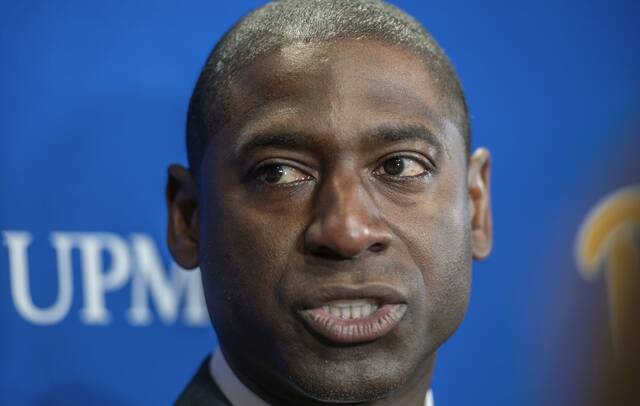
“I think Pitt with (athletic director) Allen Greene has certainly made a commitment and an investment in football,” he said. “But if you want to win a national championship, there’s a whole different level with revenue share and NIL that you’ve got to get to.”
For teams outside the perennial national contenders that want to penetrate the bubble and replicate Indiana’s success, it looks to be far easier said than done.
“Occasionally, can a team not in that club thread the needle and maybe get involved? Yeah, I think there’s teams every year that have the right mix of seniors and coaching,” Clawson said. “But if you want to be in the annual conversation, there’s a certain threshold you need to get to and how you get there doesn’t matter.
“It doesn’t matter if you have a lot of fans or a billionaire or a bunch of multi-millionaires, but you have to have a group that’s motivated to get your program to that level.”