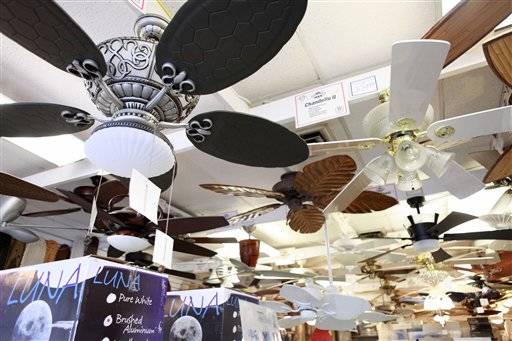
I’m getting a whole-house attic fan installed this week — just like the one my father had installed in my childhood home — and I cannot wait to cool my house using his old-time methods.
I have nothing against air conditioning, mind you. I run my central unit on summer’s hottest days. I can’t imagine how unpleasant life was in Southern states before A/C brought relief.
Willis Haviland Carrier invented air conditioning in 1902. Initially used for industrial purposes, it was being used for comfort by the mid-1920s.
Department stores and movie houses were among the first to install A/C. Regrettably, the federal government soon followed.
Washington, D.C., is a hot, humid place in summertime. Before air conditioning, federal agencies routinely shut down when the temperature got too high, giving them that much less time to think up ways to spend our money.
In modern times, A/C is a rite of passage for the emerging middle class everywhere, particularly in developing countries.
Europe’s unbearable 2003 heat wave killed more than 30,000 people. That’s unconscionable in an era when a window A/C unit costs $99 at any big-box store.
Some say A/C damages the environment, ironically causing the Earth to warm.
“As of 2009, nearly 90% of American homes have air conditioners, which account for about 6% of all the country’s residential energy use,” reported The New York Times. “All that air conditioning releases about 100 million tons of carbon dioxide each year.”
A/C requires hydrofluorocarbons (HFCs) to cool the air. They leak from aging units, and that is bad for the environment, too.
“HFCs represent a small portion of total greenhouse gas emissions, but they trap thousands of times as much heat in the atmosphere as carbon dioxide,” according to The Times.
New reports indicate air conditioning may both prevent and spread covid-19. The New York Post says air conditioning helps prevent spread by bringing fresh air in — but The Atlantic says it can help spread the virus if it is already inside, by blowing it around rooms.
Whatever the case, my goal is to cool my house just as my father did during my childhood.
With his powerful whole-house industrial fan, we got by just fine without air conditioning — when few of our suburban neighbors had A/C. He was a master at driving hot, stale air from our house.
The big attic fan sucked hot air up and out through a roof vent. A window fan in a downstairs bedroom pulled cool air in.
My father took years to perfect his method, but by closing some windows and doors and adjusting others to varying degrees of openness, he tuned our house like a fine violin. He could lower the temperature 15 degrees or more in a matter of minutes.
He always woke early and turned the fans off. Every morning, I awakened to the sound of birds chirping, a dewy coolness in the air.
In any event, by minimizing my central A/C usage, I’ll reduce my electric usage and risk of HFCs leaking into the atmosphere.
But here’s the best part.
My new whole-home fan will run all night. Its wobbling hum will fill me with a peacefulness and calm I knew as a child many years ago.
A timer will shut it off before I wake. And I’ll awaken again to the sound of birds chirping, a dewy coolness in the air.