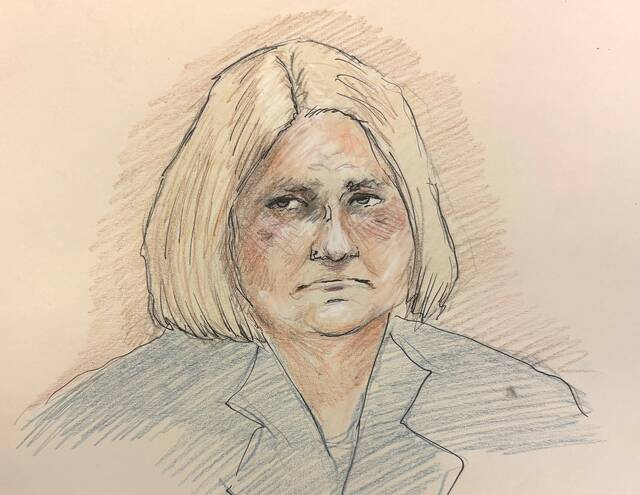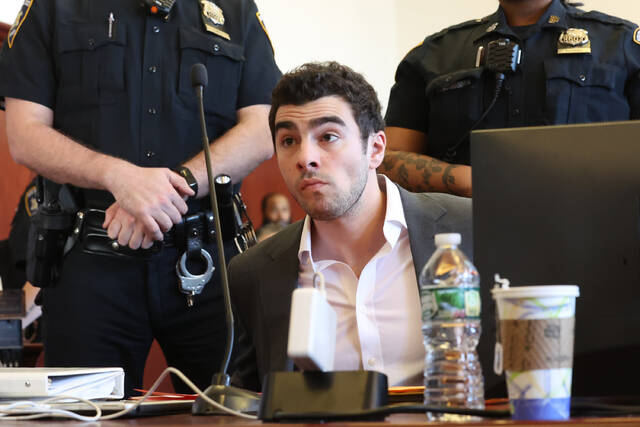
ATLANTA — A lawyer for a former elections director charged alongside former President Donald Trump and others over efforts to overturn Georgia’s 2020 election said Wednesday that he released videos of prosecutors’ interviews with some of their codefendants because he thought they helped his client and the public had the right to see them.
Jonathan Miller, an attorney for Misty Hampton, made the comments at a hearing requested by Fulton County prosecutors after news outlets earlier this week reported on the videos, which were recorded as part of plea deals. Prosecutors initially asked the judge to impose an order to prevent the release of any evidence in the case.
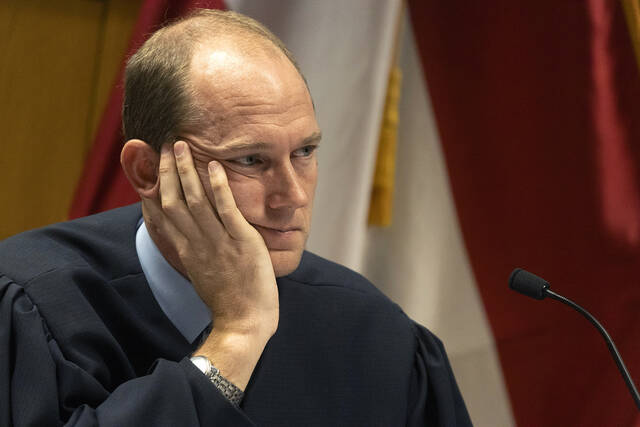
Fulton County Superior Court Judge Scott McAfee said he expected to rule Thursday and seemed inclined to issue a more limited protective order to prevent the release of materials deemed “sensitive.”
Hampton was one of 18 people charged along with Trump by a Fulton County grand jury in August. The indictment alleges a wide-ranging scheme to illegally try to keep the Republican incumbent in power even though voters had selected Democrat Joe Biden.
Jonathan Miller, attorney for Misty Hampton in Trump’s election interference case, admits he was responsible for leaking witness proffer videos:
— The Recount (@therecount) November 15, 2023
“To hide those proffers that show all the underlying things that went into those pleas, it misleads the public about what's going on.” pic.twitter.com/bWrwfeuwjJ
Four people — attorneys Sidney Powell, Kenneth Chesebro and Jenna Ellis, and bail bondsman and Trump supporter Scott Hall — pleaded guilty after reaching deals with prosecutors. The remaining defendants have all pleaded not guilty, and no trial date has been set.
As part of their plea deals, Powell, Chesebro, Ellis and Hall agreed to testify in any future trials in the case. They sat for video-recorded interviews with prosecutors — called proffers — that give a glimpse of their potential testimony.
“All four of those people that did their proffers stood in front of you, they did their plea, it was all recorded, it was sent out there for the world to see,” Hampton’s attorney, Jonathan Miller, told McAfee during a hearing Wednesday.
The videos were part of evidence, known as discovery, that had been provided to all of the defendants and their attorneys. But they were not publicly available.
Miller argued that “to hide those proffers that show all the underlying things that went into those pleas, it misleads the public about what’s going on.”
BREAKING: Attorney for Trump Co-Defendant, Misty Hampton, admits to leaking confidential witness video. pic.twitter.com/fyU5aAQpIL
— MSNBC Reports (@MSNBC_reports) November 15, 2023
Hampton was the elections director in Coffee County, in rural south Georgia, on January 7, 2021, when she’s accused of helping a computer forensics team hired by Trump allies access election equipment at the county elections office without authorization. The data and software copied was later posted on a server and accessed by an unknown number of people.
Miller noted that two of the people who have pleaded guilty — Powell and Hall — were also implicated in the Coffee County incident. He doesn’t believe the evidence offered by either of them hurts his client — if anything, it helps her and the public needs to know that, he said.
Miller told the judge he gave the videos to a news outlet but did not say which one. Both The Washington Post and ABC News reported on the videos Monday.
Prosecutors had argued a protective order was necessary “to protect witnesses and to safeguard sensitive and confidential information.” They initially asked the judge to issue an order prohibiting the disclosure of any discovery materials. They also said that any future video statements would not be sent to defendants but instead would be available for them to view in the district attorney’s office.
Defense attorneys for several of the defendants objected to the state’s request, saying there was no valid basis for a protective order. Lawyers for former Georgia Republican Party chair David Shafer offered a modified protective order that says prosecutors should have to identify “sensitive materials” that they don’t want released and that the defendants should have an opportunity to contest that designation.
Additionally, several attorneys for defendants who live far away objected to prosecutors’ intention to not distribute videos of interviews associated with any future plea deals. They argued that it wouldn’t be convenient for their clients to have to make a trip to the district attorney’s office in Atlanta to view the videos.
Ultimately, prosecutors and almost all of the defendants agreed before the hearing to accept those modified conditions, though some maintained that they did not believe a protective order was necessary at all. Prosecutors agreed that if the order was imposed, they would agree to continue to send out proffer videos to defendants.
Tom Clyde, an attorney for a coalition of news organizations, including The Associated Press, argued there’s no need for a protective order at all. He said the state must show that there’s a substantial threat of physical or economic harm to a witness to justify such an order, and he argued that burden had not been met.
Clyde also cited the enormous public interest and said it didn’t matter that both sides in the case had agreed to the terms of the proposed order.
McAfee seemed inclined to issue a protective order, citing an interest in keeping the jury pool “as untainted as possible” and in promoting the “free flow of discovery.”
He said he doesn’t take First Amendment protections lightly and pointed out that pretrial proceedings are fully open to the public and news media and any trial will be as well. But he said he thinks pretrial discovery is in “a different realm.”