


HARRISBURG — Pennsylvania Democrats have won legal challenges keeping the left-wing Party for Socialism and Liberation off the battleground state’s presidential ballot, at least for now, while a lawyer with deep Republican Party ties is working to help independent candidate Cornel West get on it.
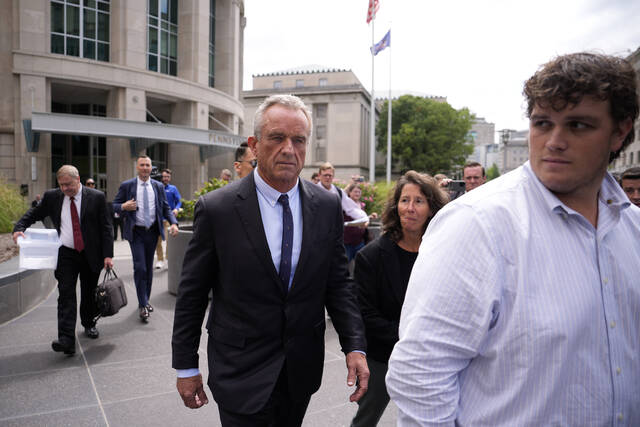
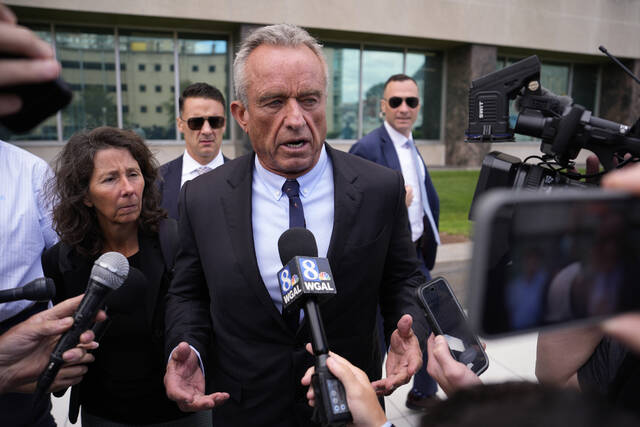
The court cases are among a raft of partisan legal maneuvering around third-party candidates seeking to get on Pennsylvania’s ballot, including a pending challenge by Democrats to the filing in Pennsylvania by independent presidential candidate Robert F. Kennedy Jr.
A Commonwealth Court judge agreed with two Democratic Party-aligned challenges on Tuesday, ruling that the paperwork filed by the Party for Socialism and Liberation was fatally flawed and ordering the party’s presidential candidate, Claudia De la Cruz, off Pennsylvania’s Nov. 5 ballot.
Seven of the party’s 19 presidential electors named in the paperwork were registered as Democrats and thus violated a political disaffiliation provision in the law, Judge Bonnie Brigance Leadbetter wrote. Six voted in the Democratic Party’s primary on April 23.
“They literally voted in the Democratic primary and then turned around to try to be electors for a third-party candidate,” said Adam Bonin, a Democratic Party-aligned lawyer who filed one of the challenges. “You can’t do that.”
The Party for Socialism and Liberation didn’t immediately say whether it planned to appeal.
Meanwhile, a lawyer with longstanding ties to Republican candidates and causes went to court to argue that the Secretary of State’s office under Democratic Gov. Josh Shapiro was wrong to reject West’s paperwork.
“I see no good reason for Mr. West to be kept off the ballot or Pennsylvanians otherwise prevented from voting for him,” the lawyer, Matt Haverstick, said in an interview. Haverstick declined to say who hired him or why.
The Secretary of State’s office is contesting the legal challenge, saying the paperwork lacked the required affidavits for 14 of the 19 presidential electors before the Aug. 1 filing deadline. A broader effort by conservative activists and Republican-aligned operatives is underway across the country to push the candidacy of the left-wing academic.
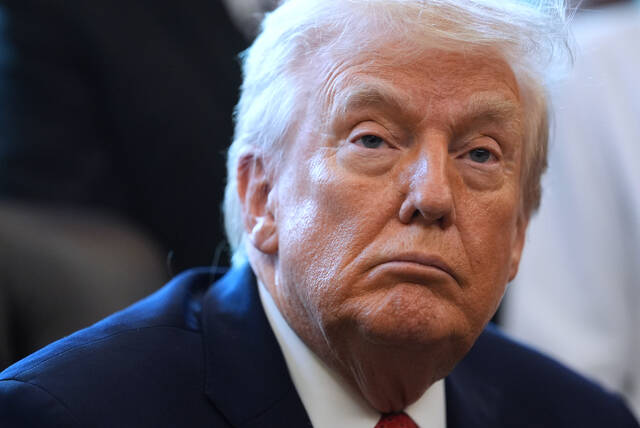
The Nov. 5 election featuring Republican nominee Donald Trump and Democratic nominee Kamala Harris is expected to be close in Pennsylvania, whose 19 electoral votes are tied with Illinois for fifth-most, and arguably are the most awarded by any battleground state.
Republicans and Democrats view third-party candidates as a threat to siphon critical support from their nominees, especially considering that Pennsylvania was decided by margins of tens of thousands of votes both in 2020 for Democrat Joe Biden and in 2016 for Trump.
The Green Party’s Jill Stein and the Libertarian Party’s Chase Oliver submitted petitions to get on Pennsylvania’s presidential ballot without being challenged.
The Democrats’ challenge of Kennedy is pending, as is the Republicans’ challenge of the Constitution Party. Republicans already won a challenge to the American Solidarity Party candidate.
In the challenge to De la Cruz, the judge cited a provision in state law under which minor-party candidates can’t be registered with a major political party within 30 days of that year’s primary election.
Leadbetter, elected as a Republican, said it is clear that seven of the party’s 19 named presidential electors were registered as Democrats both before and after Pennsylvania’s April 23 primary.
De la Cruz’s lawyers argued that the party should be able to substitute new electors or simply accept just 12 of Pennsylvania’s 19 electoral votes instead.
But Leadbetter wrote that Pennsylvania law doesn’t allow a post-deadline substitution in this kind of situation, and the U.S. Constitution provides for specific proportional representation among the states in the Electoral College, so awarding fewer electoral votes even in just one state would subvert that proportionality.