Alongside local police and federal agents raiding Dr. Emilio Ramon Navarro’s Fayette County office on Monday were drug and alcohol counselors helping patients find alternatives as their doctor was arrested on federal charges.
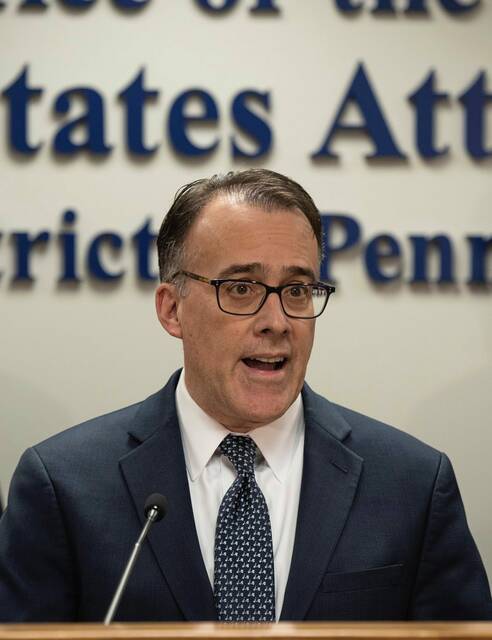
It’s the first time such a rapid-response team has been deployed during the arrest of a medical professional, U.S. Attorney Scott Brady said Wednesday.
“We know that while shuttering an office might mean the end of a doctor’s illegal behavior, it marks the beginning of an opioid-dependent patient’s quest for a new prescriber,” he said. “Sometimes the street is the first choice.”
Navarro, 58, of Coal Center, was indicted on 29 charges of health care fraud and illegal prescribing for allegedly trading drugs for sex with one of his patients.
“He was exploiting the addiction of one of his patients for his own personal gain,” Brady said.
He said that when authorities arrived at the office at 7 a.m., 50 people were in line outside the office, which opens at 8:30 a.m.
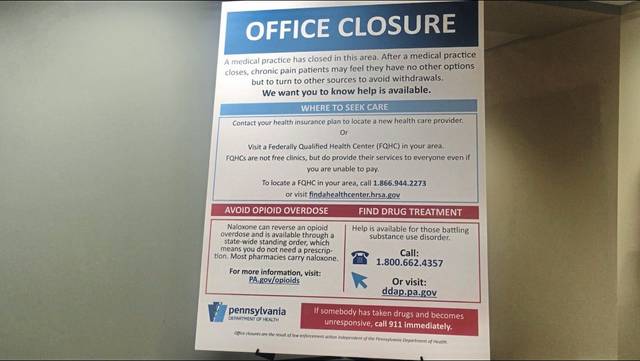
Representatives from the state Department of Health and drug and alcohol counselors from Washington and Fayette counties engaged those patients as the raid happened, handing out flyers on where to seek legitimate care, where to find a new doctor or pharmacy and how to get into opioid addiction treatment if needed.
Brady said counselors were able to direct about half of those patients to other medical professionals. He said the goal is to get those who legitimately need prescription drugs to a new doctor and those who need addiction treatment into a treatment facility.
He said the Department of Health is working on guidelines so such rapid-response teams can act statewide when a provider is arrested, leaving opioid-dependent patients cut off.
Secretary of Health Dr. Rachel Levine spoke on the issue last week during a conference for UPMC employees, saying individuals dependent upon their prescriptions can turn to street drugs if they’re left without other options.
“You can’t cut off patients,” she said. “If you have someone that’s been carried for three or five or 10 years on opioids, you cannot cut that person off — that patient is physiologically dependent on opioids.”