
WASHINGTON — Long before the ancient Maya built temples, their predecessors were already altering the landscape of Central America’s Yucatan peninsula.
Using drones and Google Earth imagery, archaeologists have discovered a 4,000-year-old network of earthen canals in what’s now Belize. The findings were published Friday in Science Advances.
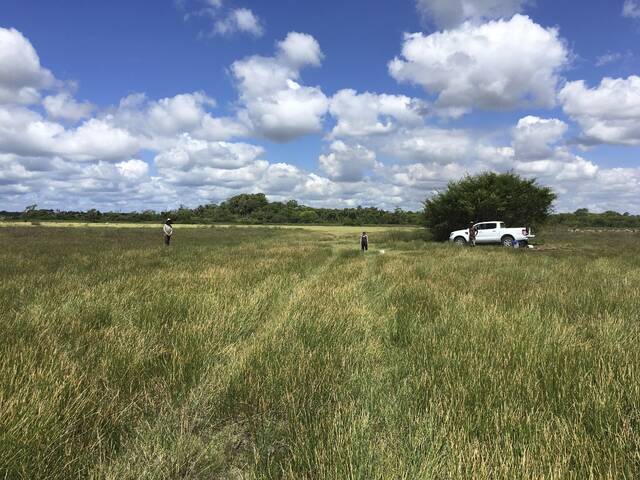
“The aerial imagery was crucial to identify this really distinctive pattern of zigzag linear canals” running for several miles through wetlands, said study co-author Eleanor Harrison-Buck of the University of New Hampshire.
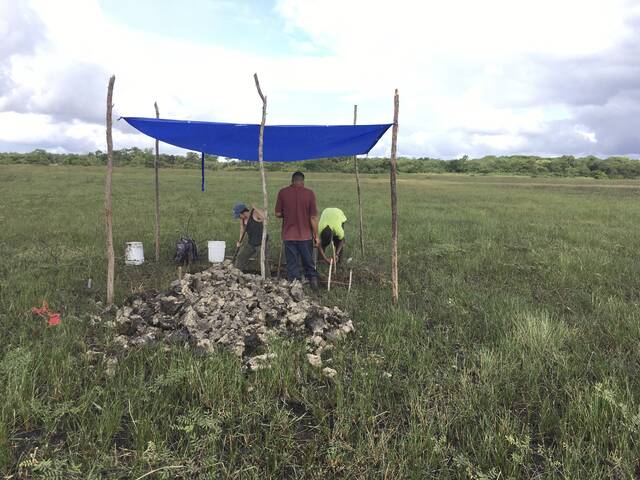
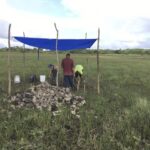
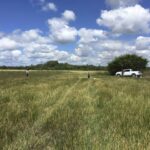
The team then conducted digs in Belize’s Crooked Tree Wildlife Sanctuary. The ancient fish canals, paired with holding ponds, were used to channel and catch freshwater species such as catfish.
“Barbed spearpoints” found nearby may have been tied to sticks and used to spear fish, said study co-author Marieka Brouwer Burg of the University of Vermont.
The canal networks were built as early as 4,000 years ago by semi-nomadic people in the Yucatan coastal plain. According to the study, the canals were used for around 1,000 years or longer, including during the “formative” period when the Maya began to settle in permanent farming villages and a distinctive culture started to emerge.
“It’s really interesting to see such large-scale modifications of the landscape so early — it shows people were already building things,” said University of Pittsburgh archaeologist Claire Ebert, who was not involved in the study.
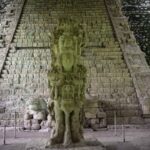
At the height of Maya civilization, people in this region built temples, roads, pyramids and other monuments. They also developed complex systems of writing, mathematics and astronomy. Scientists know far more about this era because there are many more significant archaeological sites, said Ebert.
But this new study reveals a link between the earlier people on the landscape and the later emergence of Maya culture. These ancient channels for catching fish may have played a role in helping later Maya pyramids rise above the Yucatan rainforest.
“This shows continuity,” said University of Pennsylvania archaeologist Jeremy Sabloff, who wasn’t part of the research.
On a practical level, the fish-trapping canals helped the early people in the region to diversify their diets and feed a growing population, building a foundation for later cultural heights.