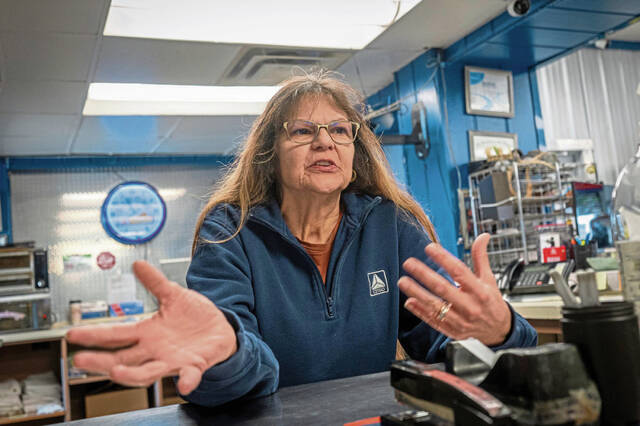
Parents in Hempfield Area School District remain divided over whether books that some deem objectionable should be taught in the classroom or available in the library.
The school board this week advanced a policy that has been in the works for about a year that could be adopted in June. If approved, the policy details the procedure the district would use for dealing with book challenges. It also includes guidelines to prevent the availability of books with sexually explicit content.
About 60 people attended a meeting this week where board members heard perspectives from parents focused on removing books they deem inappropriate and others who aim to avoid censorship.
Parent opinions
Before the vote, residents and parents raised a multitude of concerns, some of which garnered bursts of applause from other attendees who agreed.
Some speakers said moves to restrict books would disproportionally impact marginalized students, such as those of color, who are part of the LGBTQ community or who are victims of abuse.
“If you can go to a book and you find comfort that somebody out there is just like you, maybe you won’t be threatened to commit suicide,” said Donna Eicher, a retired Hempfield teacher.
She said she read the book “All Boys Aren’t Blue,” a book discussing author George M. Johnson’s experience growing up as a queer Black man, and said it promotes empathy. The book was one of two books previously challenged at the district but was allowed to remain.
Hempfield parent Ceil Kessler recommended a limit be added to the challenge policy to prevent excessive challenges from one person on specific topics. She requested a record be kept of taxpayer dollars spent on each challenge. She noted the age of legal consent in Pennsylvania is 16 and that students might be dealing with sexual situations in their lives.
“How can we tell (kids), when they are in possibly difficult, possibly confusing situations, that they are not allowed to find themselves in books, that they can’t look to characters who are also being pressured, who are also lonely, who are also confused, and find fellowship in those pages?” she said. “You’re trying to keep them from learning about things that they are legally, regularly and continually facing.”
Caila Koring, an alum who has nephews and a niece in the district, said including a student on the challenge committee is a good idea.
“I consider the student voice a vital part of the book reevaluation committee and fiercely oppose removing them,” she said. “Their perspective on content is important to better inform the committee because they are the affected population, ultimately. They get a single representative and in no way have an overwhelming sway on the ultimate decision of the committee.”
Contrasting perspectives
Some parents said the proposed regulations are not strict enough. Several consider the composition of the challenge committee to be unfair.
“The challenge process is not going to remove these books. The committees are going to be biased, and they are going to keep these books,” said Tracy Miller, a Hempfield resident who is running for school board.
Parent Paula Cinti noted all questioned materials still are available to purchase in bookstores and in public libraries.
“The content in the school library needs to be suitable for a general audience of minor students,” she said. “Responsible resource selection is not book banning.”
She said she also is concerned about the presence of a student on the challenge committee.
Lindsay Stevens, who is running for school board, recommended books be removed from the library while they are under challenge. She also opposed including a student on the challenge committee.
“A student, even a high school student, is in fact a minor,” she said. “Why would we bring them in and ask them to read a book that potentially violates school policy?”
Board member Michael Alfery voted yes on both regulations but suggested an age limit of 18 or older be put on participating in the challenge committee.
Board member Diane Ciabattoni said the voice of a student on the committee is worthwhile.
“I think it’s very important. This is their world, and they live in a different world than we all did,” she said. “I like the committee the way it is with including the students.”
Related:
• New Hempfield book challenge, acquisition rules up for vote• Hempfield Area’s proposed college lit class sparks debate over appropriate material
• Hempfield Area remains stuck on placement of books in school library, curriculum
• Hempfield book challenge policy could mirror one used for websites
• Librarians, parents weigh in on Hempfield's library book policy as some titles are questioned
• Hempfield Area policy change would expand parents' role in review of challenged books
• Hempfield is latest district to face book ban challenge